



Blog Questions about beds and mattresses answered. And some stories told.
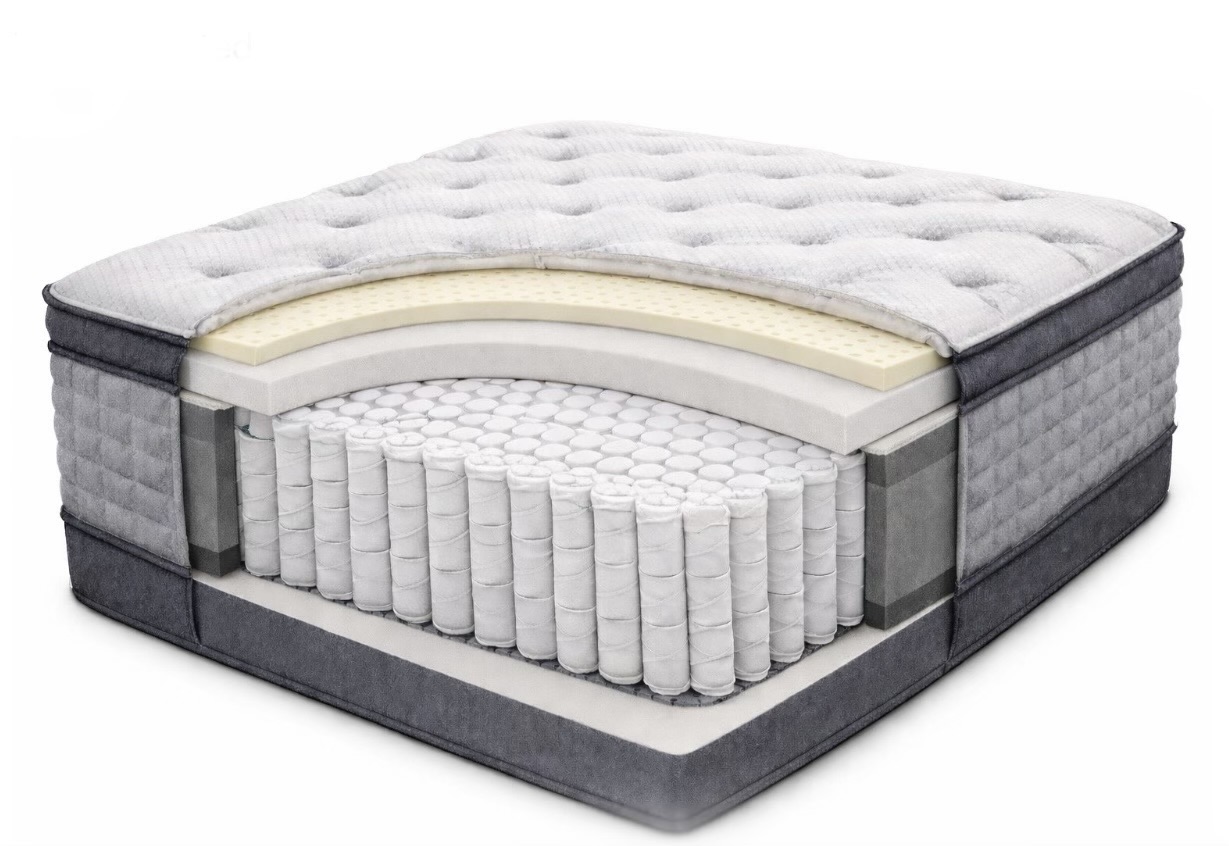
Pocket coils (also called individually wrapped springs) have evolved considerably since their invention, with improvements focused on comfort, support, durability, motion isolation, and manufacturing efficiency.
Early History: Origins of Pocket Coils (Early 1900s)
- Pocket coils were invented in the early 1900s by James Marshall in England.
- Each spring was wrapped in its own fabric pocket, allowing it to move independently.
- This was a major improvement over traditional interconnected spring systems like Bonnell coils.
- The key benefit was better body contouring and reduced motion transfer.
Mid-20th Century: Gradual Adoption (1950s–1980s)
- Pocket coils became more common as manufacturing techniques improved.
- Early systems typically used:
- Simple, single-layer coil units
- Natural fabrics such as cotton for the pockets
- Compared to open-coil systems, they offered:
- Improved pressure distribution
- Better motion isolation
- However, coil counts were relatively low, and zoning was minimal or nonexistent.
1990s: Increased Customization and Comfort Layers
- Manufacturers began experimenting with zoning:
- Firmer coils under the hips and lumbar region
- Softer coils under shoulders and legs
- Comfort layers were added above coil units, including:
- Pillow tops
- Foam layers
- Coil counts increased, though marketing sometimes emphasized quantity over quality.
2000s: Engineering and Material Improvements
Several technical advancements emerged during this period:
Independent Response and Precision
- Improved pocket construction allowed coils to respond more accurately to body weight and movement.
- Motion isolation improved significantly compared to older innerspring designs.
Variable Wire Gauges
- Different wire thicknesses were used within the same mattress to fine-tune firmness and support.
- Thicker wire provided firmer support; thinner wire allowed more compression.
Stronger Materials
- High-tensile steel became standard, increasing durability and resilience.
- Synthetic fabrics replaced older cotton pockets, reducing wear, noise, and friction.
2010s: Rise of Hybrid Mattresses
Pocket coils became central to hybrid mattress designs that combine springs with foam or latex.
Hybrid Construction
- Pocket coils provided support and airflow.
- Foam or latex layers added pressure relief and contouring.
Advanced Zoning
- Mattresses commonly featured three to seven support zones.
- Zoning improved spinal alignment and reduced pressure points.
Edge Support Enhancements
- Reinforced perimeter coils allowed sleepers to use more of the mattress surface without collapse.
2020s to Present: Precision, Comfort, and Sustainability
Recent developments focus on fine-tuning comfort and reducing environmental impact.
Micro-Coils and Layered Systems
- Micro-pocket coils are sometimes used in comfort layers for more responsive cushioning.
- Some mattresses combine large support coils with smaller comfort coils.
Improved Pocket Fabrics
- More breathable, durable fabrics are used to reduce heat buildup and extend lifespan.
- Designs aim to minimize noise and friction between coils.
Data-Driven Design
- Sleep research and biomechanical data inform coil zoning and firmness profiles.
- Designs increasingly target specific sleep positions and body types.
Sustainability
- Use of recycled steel and low-emission manufacturing processes is increasing.
- Some brands focus on recyclable components and certified materials.
Why These Changes Matter
- Modern pocket coils adapt more accurately to body shape and movement.
- Zoned support improves spinal alignment and pressure relief.
- Improved materials extend mattress lifespan.
- Enhanced airflow helps regulate sleeping temperature.
- Motion transfer between sleeping partners is significantly reduced.
Summary
Pocket coil technology has evolved from simple individually wrapped springs into highly engineered systems with precise zoning, advanced materials, and hybrid construction. These changes have made modern mattresses more comfortable, supportive, durable, and adaptable to different sleepers.
.png)
 Copyright © 2025 |